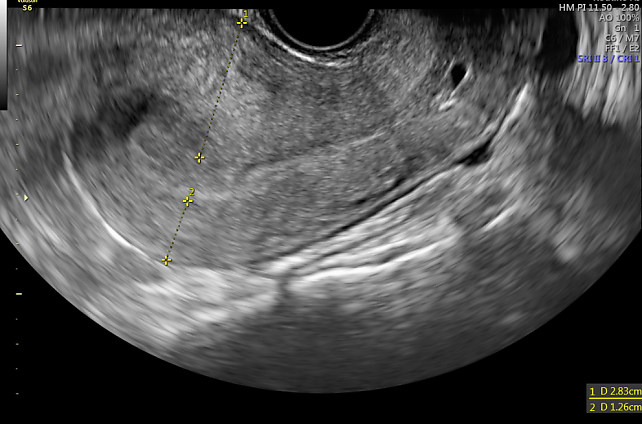
Recognising the signs of endometriosis requires expertise, experience and a trained eye. 🎗️
Endometriosis is a complex condition that can affect the pelvis, bowel, bladder, ovaries and other surrounding structures. While some forms of endometriosis can be difficult to detect, an expert endometriosis ultrasound scan can identify important signs of disease and help specialists understand its location and severity.
For patients living with pelvic pain, painful periods, pain during intercourse, bowel or bladder symptoms, or fertility difficulties, getting an accurate assessment can be an important first step towards receiving the right treatment.
At Pyramedicine, we help international patients access specialist endometriosis assessment and treatment in Egypt, combining experienced medical teams, advanced diagnostic imaging and personalised support throughout their medical journey.
How Does Endometriosis Look on an Ultrasound?
You may have wondered: “What does endometriosis actually look like on an ultrasound?”
The appearance can vary considerably depending on where the endometriosis is located.
On an expert ultrasound, a specialist may look for signs such as:
- Endometriosis nodules
- Ovarian endometriomas
- Thickening or distortion of pelvic structures
- Adhesions between organs
- Reduced movement of the ovaries or uterus
- Bowel involvement
- Bladder endometriosis
- Site-specific tenderness during the examination
- An abnormal or negative sliding sign
Importantly, an ultrasound performed specifically to assess for endometriosis is different from a routine pelvic ultrasound. The experience of the person performing and interpreting the scan matters, particularly when looking for deep endometriosis.
Bladder Endometriosis on Ultrasound
One example of deep endometriosis is bladder endometriosis.
On an expert ultrasound examination, an endometriosis nodule may be seen involving the bladder wall. The specialist may assess the location of the lesion, its relationship with surrounding structures and whether there is associated tenderness.
This type of detailed assessment can help build a clearer picture of the disease and assist the multidisciplinary team when planning treatment.
Endometriosis Affecting the Bowel
Endometriosis can also affect the bowel, particularly the rectum and sigmoid colon.
On ultrasound, bowel endometriosis may appear as a hypoechoic (dark) nodule or thickening involving the muscular layer of the bowel wall.
A specialist will also assess how the bowel moves relative to surrounding pelvic structures. This is where dynamic ultrasound techniques can provide particularly useful information.
What Is the Sliding Sign?
The sliding sign is one of the dynamic assessments that may be performed during an endometriosis ultrasound.
It evaluates whether pelvic organs can move freely against one another.
If normal movement is restricted, this may suggest adhesions or deep endometriosis affecting the surrounding structures.
For example, an ovary that appears fixed behind the uterus rather than moving normally may raise suspicion of pelvic adhesions or endometriosis.
Why Expertise Matters When Diagnosing Endometriosis
Endometriosis can be challenging to diagnose.
Some patients have extensive symptoms despite relatively subtle findings, while others may have deep endometriosis that is only identified when a specialist deliberately looks for specific signs.
This is why an endometriosis-focused ultrasound performed by an experienced specialist can be so valuable.
The examination may involve assessing multiple pelvic compartments rather than simply looking at the uterus and ovaries.
A specialist may systematically evaluate:
Anterior compartment
Including the bladder and tissues between the bladder and uterus.
Uterus and ovaries
Looking for endometriomas, adhesions and abnormalities in ovarian mobility.
Posterior compartment
Including the area behind the uterus, uterosacral ligaments and rectovaginal region.
Bowel
Assessing the rectum and sigmoid colon for evidence of deep infiltrating endometriosis.
This systematic approach can help identify disease that might otherwise be missed.
Does a Normal Ultrasound Rule Out Endometriosis?
No.
A normal ultrasound does not necessarily mean that a patient does not have endometriosis.
Some superficial forms of endometriosis may not be visible on ultrasound, and the sensitivity of imaging can depend on the location and extent of disease as well as the expertise of the person performing the examination.
Depending on the symptoms and clinical findings, your doctor may recommend additional investigations, such as MRI, or other specialist assessment.
Your symptoms and medical history remain an important part of the diagnostic process.
Why Accurate Diagnosis Matters
Receiving an accurate assessment is an important first step towards developing an appropriate treatment plan.
Understanding where endometriosis is located and how deeply it affects surrounding organs can help specialists determine the most appropriate management strategy.
For patients who may require surgery, detailed imaging can also provide valuable information when planning an operation.
In selected cases, treatment may involve laparoscopic excision surgery, where visible endometriosis is surgically removed. The appropriate approach depends on the individual’s disease, symptoms, fertility goals and overall clinical assessment.
The aim is not simply to identify that endometriosis exists, but to understand where it is and how it is affecting the patient.
Endometriosis, Fertility and IVF
Endometriosis can also be associated with fertility difficulties.
Some patients may seek specialist assessment because they have been trying to conceive, while others may already be considering IVF treatment.
The right approach depends on factors such as age, ovarian reserve, previous surgery, the severity and location of endometriosis, previous fertility treatment and the patient’s reproductive goals.
A personalised fertility assessment can help determine whether surgery, IVF, medical management or a combination of approaches may be appropriate.
Medical Tourism for Endometriosis Treatment in Egypt
For patients travelling internationally for treatment, accessing specialist endometriosis care can offer an opportunity to combine advanced diagnostic imaging, specialist consultation and personalised treatment planning in one coordinated journey.
Medical tourism has become an increasingly considered option for patients seeking specialist care outside their home country.
At Pyramedicine, we help international patients navigate their medical journey in Egypt — from arranging specialist consultations and diagnostic investigations to coordinating treatment and supporting patients throughout their stay.
Our goal is to make accessing specialist endometriosis care as clear and straightforward as possible.
Take the First Step Towards Understanding Your Endometriosis
If you are experiencing severe period pain, chronic pelvic pain, painful intercourse, bowel or bladder symptoms, or unexplained fertility difficulties, it may be worth discussing endometriosis with a qualified specialist.
The first step is understanding what may be causing your symptoms.
Get your symptoms assessed. Get the right imaging. Understand the extent of your endometriosis. Then discuss the treatment options available to you. 🎗️
If you are considering endometriosis diagnosis or treatment in Egypt, Pyramedicine can help coordinate your specialist care.
Book a Free Consultation
Our team is available to answer your questions and help you understand your options for specialist endometriosis care in Egypt.
🔗 Pyramedicine: https://pyramedicine.com
📞 WhatsApp: +20 105 501 2366
💌 Or contact us via DM
Endometriosis diagnosis and treatment should be individualised following assessment by an appropriately qualified medical professional. Imaging findings do not always correlate directly with symptoms, and a normal scan does not exclude all forms of endometriosis.
Frequently Asked Questions About Endometriosis Ultrasound
Can endometriosis be seen on an ultrasound?
Yes. Certain forms of endometriosis, particularly ovarian endometriomas and deep endometriosis, can be identified on an expert ultrasound examination. However, not all endometriosis is visible on ultrasound.
What does bowel endometriosis look like on ultrasound?
It may appear as a hypoechoic nodule or thickening involving the muscular layer of the bowel. The specialist may also assess bowel mobility and the relationship between the bowel and surrounding pelvic structures.
Can bladder endometriosis be seen on an ultrasound?
Bladder endometriosis can sometimes be identified as a nodule involving the bladder wall, particularly during a dedicated endometriosis ultrasound.
What is a negative sliding sign in endometriosis?
A negative sliding sign means that normally expected movement between pelvic structures is restricted. This can suggest adhesions or deep endometriosis, although it needs to be interpreted alongside the rest of the examination.
Does a normal ultrasound mean I don’t have endometriosis?
No. Some forms of endometriosis, particularly superficial disease, may not be detected on ultrasound. Persistent symptoms should be discussed with a specialist even if previous imaging was reported as normal.
Can endometriosis be treated with surgery?
In selected patients, laparoscopic surgery may be used to remove endometriosis lesions. The decision depends on symptoms, disease location and severity, fertility plans and the patient’s individual circumstances.