By Saatvik Chopra
Early surgical practice belonged to the Era of Anatomy, where speed was often the only defence against pain. This was followed by the Era of Safety, shaped by anaesthesia and antibiotics, and later the Era of Access, where minimally invasive and “keyhole” techniques transformed how surgeons reached the human body. Today, we are entering what can be described as the “Era of Precision.”
Despite these advances, surgery has always carried a great emotional and physical weight. Patients often approach it with vulnerability and the fear of the unknown. Surgeons, despite their extraordinary skill, must operate for hours under intense focus, making decisions where millimetres can alter outcomes.
That reality, however, is beginning to change. Modern surgery is defined by thoughtful planning, refined execution, and technologies designed to support both surgeon and patient in ways that were not previously possible.
Surgeons, Human Limits & Why Assistance Matters
At the centre of this transition lies a simple truth: even the most skilled surgeons are humans. Mastery in surgery is built through years of training, long hours, consistent practice, and extraordinary discipline. Yet, despite this expertise, surgical performance is ultimately shaped by the limits of the human body.
Surgeons are often regarded with near-mythical respect, and rightly so, but fatigue, natural hand tremor, and limitations in visibility remain unavoidable realities. No two anatomies are identical, and no operation unfolds exactly as planned.
Recognising this has not diminished the role of surgeons but rather paved the way for integrating new technologies designed to support precision where it is needed the most. Nonetheless, they are not meant to be a substitute for surgeons, but rather an extension of their skills.
Robotic-Assisted Surgery: Extending Surgical Precision
This challenge has led to the development of robotic-assisted surgery. Surgical robots are often classified based on their level of autonomy. While technology continues to advance, robots used in surgery today are not fully autonomous. Instead, they function as advanced surgical tools, translating the surgeon’s movements into precise and controlled actions. These systems are always controlled by the surgeon and are used only when they enhance accuracy, precision, and efficiency during a procedure.
During a robotic-assisted procedure, the system consists of a camera arm and multiple mechanical arms with surgical instruments. These are controlled by the surgeon, who operates from a control centre, or console, positioned near the operating table. This setup provides the surgeon with a magnified, high-definition, three-dimensional view of the surgical site, allowing for greater visual clarity and control during complex procedures.
Beyond visualisation, robotic systems extend surgical capability by enhancing skill and stability. The robotic arms are equipped with wristed instruments that replicate and exceed the range of motion of the human wrist, offering up to seven degrees of freedom. This allows surgeons to operate with greater precision in confined or difficult-to-reach anatomical spaces. In addition, robotic platforms maintain a steady, stable camera position throughout the procedure, eliminating variability caused by human assistance and enabling the surgeon to work from an ergonomic console, which helps reduce physical strain during longer procedures. These techniques are being adopted by a wide range of surgeons, including orthopaedic, cardiothoracic, general, and even neurosurgeons.
How Robotic-Assisted Surgeries Are Performed
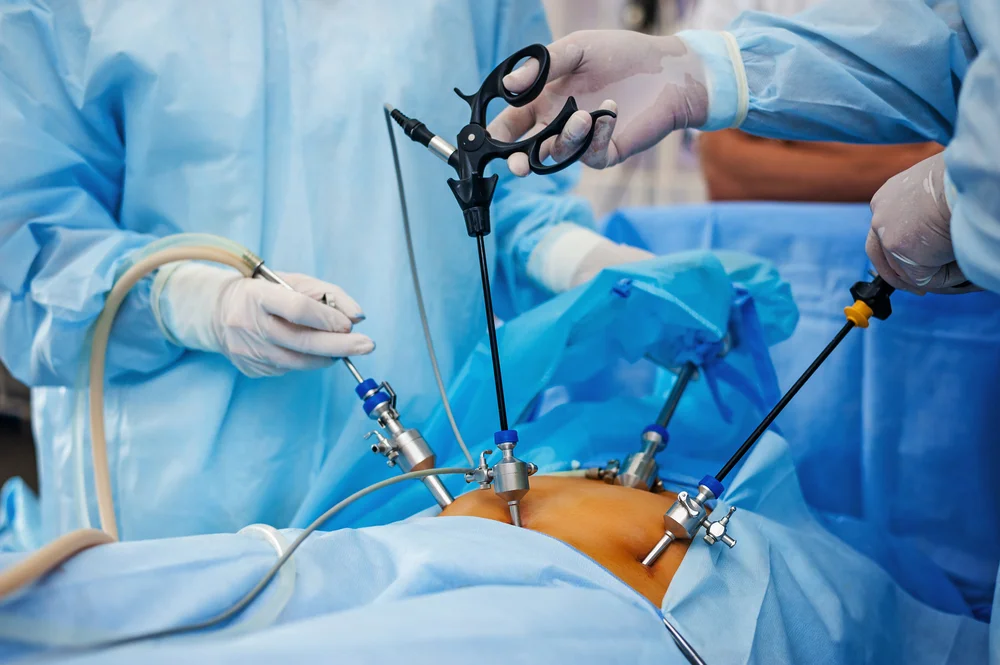
During robotic-assisted surgery, instead of making a large incision, the surgeon makes a few smaller incisions. Through these incisions, temporary ports, or thin tubes, are placed to provide access for surgical instruments. Robotic devices are then attached to these instruments, allowing them to be precisely controlled by the surgeon.
A camera is introduced through one of the ports, providing a magnified, high-definition, three-dimensional view of the surgical site throughout the procedure. Once the surgery is complete, all instruments and ports are removed, and the incisions are closed using sutures.
AI-Planned Surgeries: Precision Before the Incision
AI-assisted surgical planning makes surgery less reactive and more predictive by enabling surgeons to analyse complicated patient data before entering the operating room. Artificial intelligence interprets patient-specific data from imaging modalities like CT and MRI because no two anatomies are the same. Surgeons can plan procedures with accuracy and foresight because this analysis takes place long before the first incision is made.
Fundamentally, AI-based planning involves the systematic gathering and analysis of data to facilitate well-informed surgical decision-making. This strategy goes beyond the actual operating room. As technology continues to advance, similar data-driven principles are being applied in postoperative care and rehabilitation. AI-assisted exoskeletons, for example, can adapt their function based on real-time data, and advanced prosthetics are increasingly capable of responding to neural signals and environmental feedback, allowing movements that closely resemble natural limb function.
By transforming surgery into a planned and predictable process, AI-assisted planning has influenced both the advantages and the limitations of robotic-assisted procedures. Preoperative planning can reduce uncertainty for surgeons while offering patients greater clarity and reassurance. Beyond surgery, AI-driven innovations are also reshaping recovery, supporting more adaptive and responsive rehabilitation experiences tailored to individual patient needs.
Advantages and Limitations of Robotic-Assisted Surgery
Robotic-assisted surgery, like any medical advancement, presents both advantages and limitations. Research and clinical experience suggest that, in many procedures, robotic-assisted approaches are associated with fewer complications, such as surgical site infections, reduced blood loss, and less postoperative pain. These factors often contribute to shorter hospital stays and quicker recovery times. Smaller incisions may also result in less noticeable scarring and allow patients to regain mobility sooner, with some able to eat, walk, or return home within a day, depending on the procedure and their overall health.
Despite these benefits, robotic-assisted surgery is not without its challenges. Certain operative factors may demand an open procedure with larger incisions. Additional risks include nerve injury or compression, and although rare, technical malfunctions of robotic systems can occur. These considerations highlight the importance of careful patient selection and surgeon expertise. Robotic surgeries often need a separate fellowship or training to master as well.
Considering Robotic-Assisted Surgery?
With the introduction of robotic-assisted systems and AI-supported planning, surgery is no longer shaped only by what happens in the operating room but also by careful preparation beforehand and afterwards. These technologies do not replace surgeons or their judgment. Instead, they support precision, planning, and help surgeons manage complex procedures with greater confidence. When used appropriately, they can enhance surgical care, but they must always be guided by experience, responsibility, and patient-specific needs.
· References
Mayo Clinic – Robotic surgery.
https://www.mayoclinic.org/tests-procedures/robotic-surgery/about/pac-203944
· Cleveland Clinic – Robotic surgery.
https://my.clevelandclinic.org/health/treatments/22178-robotic-surgery
· Journal of Robotic Surgery
https://link.springer.com/journal/11701
https://en.wikipedia.org/wiki/Journal_of_Robotic_Surgery
· Clinical Robotic Surgery Association https://en.wikipedia.org/wiki/Clinical_Robotic_Surgery_Association
· AI and Robotic Integration in Precision Surgery https://www.explorationpub.com/Journals/edht/Article/101162
· Academic Review on AI Utility in Robotic Surgery
https://www.sciencedirect.com/science/article/pii/S0011384025002230
· Recent Advances in AI-Driven Clinical Robotics
https://www.tandfonline.com/doi/full/10.1080/20565623.2025.2540742
· Da Vinci Surgical System
https://en.wikipedia.org/wiki/Da_Vinci_Surgical_System
· Surgical Robotics & Innovation Landscape (Contextual Reading)
https://www.foundernest.com/insights/13-funded-companies-in-the-robotic-surgery-and-minimally-invasive-techniques-space